
How to support students through the festive season: Restoring safety, structure and connection

The run-up to Christmas is often painted as a time of sparkle and celebration. But for many young people, particularly those with additional needs, those living in foster care, or those facing difficult home environments, this season can bring disruption rather than joy. As educators, carers, and support professionals, it’s vital to understand why the festive period can be challenging and how we can help restore stability, safety and connection as the new term approaches.
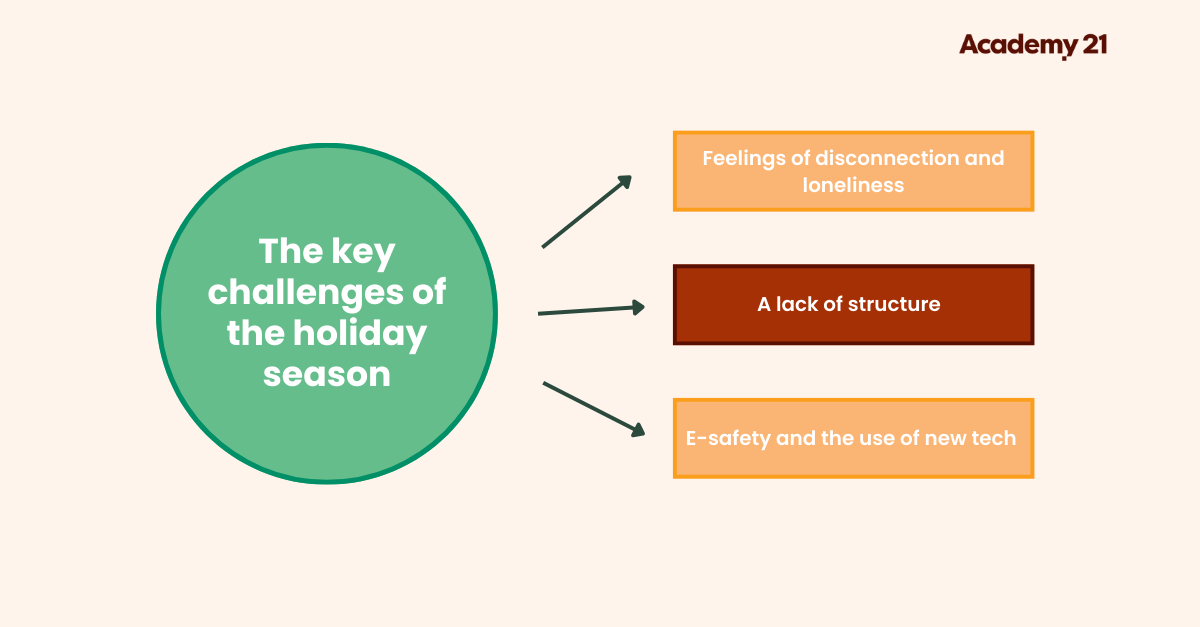
The key challenges of the holiday season
1. A lack of structure
While holidays are typically welcomed, they also remove the structure many young people rely on. The Christmas break often involves late nights, irregular meals, unpredictable visits from friends and family, and overstimulating environments filled with lights, noise and disrupted routines.
For students with additional needs, this sudden shift can lead to dysregulation or anxiety. Familiar school timetables are replaced with unstructured days, making it harder for some students to feel grounded. This lack of routine can also intensify sensory overload or feelings of instability, making the return to school in January feel particularly overwhelming.
2. Feelings of disconnection and loneliness
Each year, thousands of children unwrap new devices: smartphones, tablets, gaming consoles, VR headsets. While these gifts can offer connection and stimulate creativity, they also introduce new online risks if not accompanied by clear guidance. In the absence of school routines, children may spend more time unsupervised online, increasing exposure to harmful content, unfiltered communications, or coercive behaviour.
It’s therefore crucial for parents, carers and schools to work together on establishing clear digital boundaries, reviewing privacy and safety settings on all devices, and encouraging open conversations about online behaviour. Importantly, both parents and educators must make children aware of how to protect themselves against e-bullying and where they can seek help. A safe digital environment is just as important as a safe physical one, especially during school holidays when professional oversight is reduced.
3. Feelings of disconnection and loneliness
For children and young people in foster care, Christmas can be an emotionally charged period. While some experience warmth and belonging in their foster families, others may face complex feelings of loss, uncertainty or divided loyalties. Many look forward to school as the place where predictable routines, trusted relationships and emotional safety exist.
During holidays, these support systems disappear temporarily. For some, the absence of their key adults, from teachers to pastoral teams and learning mentors, can feel like a rupture in the relationships that help regulate and reassure them.
For some young people, the home environment itself can become a source of distress. Issues such as domestic abuse can profoundly affect a child’s mental health and, in some cases, place them at serious risk.
Last winter, nearly 3,000 children contacted Childline for help. Between April and September 2024 alone, the NSPCC Helpline received 3,879 contacts about children experiencing domestic abuse – a 19% increase on the previous year. Mentions of coercive control and emotional domestic abuse increased by half during this period.
As children spend more time at home in potentially unsafe or volatile environments, the festive season can sadly become a flashpoint for these concerns.
Why relational practices matter more than ever
For many young people, the relationships they build in school anchor them through difficult periods. Teachers, learning support assistants, pastoral leads and foster carers play a crucial role in helping young people feel seen, understood, and emotionally contained. Over Christmas, that emotional scaffolding becomes harder to maintain. As students return in January, relational practices can make all the difference:
- Warm, predictable welcomes help reduce anxiety and rebuild trust.
- Opportunities to reconnect, through check-ins, circle time, or short conversations, remind students they belong.
- Emotionally attuned responses help students feel safe enough to learn.
- A focus on co-regulation supports young people whose nervous systems are already stretched after weeks of unpredictability.
At Academy21, all our teachers are trained in trauma-informed and relational practices. They know how to recognise emotional distress, respond calmly, and build trust over time. Students see the same teachers and members of staff consistently, helping to establish secure, predictable relationships.
Practical strategies to support students before and after the festive break
Supporting young people through the holiday season means preparing them before routines change, and helping them settle after they return. Here are some of the strategies we use at Academy21 for both periods to help maintain stability, safety and connection.
Before the break: Preparing students for disruption and keeping them safe
- Maintain structure for as long as possible
In the final days of term, keep routines predictable. Avoid significant timetable changes or last-minute surprises. This helps students, especially those with SEN or in foster care, feel steady as the holiday approaches. - Talk openly about upcoming changes
Prepare students for what the break will look like: different mealtimes, sleeping patterns, busier home environments, or changes in where they spend Christmas. Visual countdowns can help young people understand what’s coming. - Reinforce digital safety ahead of new tech gifts
In our assemblies, we cover topics like safe communication and online boundaries and encourage students to speak up if something online makes them feel unsafe. This helps young people stay safe online, especially a time when adult supervision may be more limited. - Provide carers and parents with support
For foster carers or families managing complex needs, schools can offer guidance on maintaining some basic routines, spotting signs of distress, or how to regulate overstimulated children. This is especially important for young people who may find the festive season triggering. - Strengthen relational connections before students leave
A final check-in, whether through a conversation or class circle, can help reassure students that they remain held in mind, even when school closes.

After the break: Rebuilding stability and helping students re-settle
- Reintroduce routine gradually
Students may struggle to move from unstructured days to a full timetable. Gently easing them back, using predictable morning routines, re-establishing expectations and giving extra time for transitions, helps rebuild a sense of safety. - Use visual timetables to reduce uncertainty
Share a visual schedule for the first week back, including lessons, breaks and any changes. This gives students, especially those with additional needs, a clear roadmap for the start of term. - Prioritise reconnection before academic content
Give young people the opportunity to reconnect with trusted adults and peers. Not every child will want to talk about their holiday, especially those who experienced distress or instability, so it’s important to offer choice rather than add pressure. - Create calm, quiet spaces for regulation
A designated safe space helps students who feel overstimulated or anxious after an unpredictable break. At Academy21, all our classes are small (a maximum of 15 students), creating an environment that feels safer than large, overstimulating classrooms. - Notice signs of distress
If a student seems unusually withdrawn, anxious, or shows changes in behaviour, they may need extra help. Academy21 offers early intervention services that help students reengage with learning before any issue escalates. Aside from our DfE-accredited curriculum, we offer flexible commissioning and timetabling options to support students from the moment schools, local authorities, MATs, or PRUs engage with us.
Rebuilding safety and stability for the year ahead
The festive season, while joyful for many, is a time when thousands of children face anxiety, instability or unsafe environments. As educators and carers, our role in January goes far beyond helping students “settle back in.” We need to restore structure after chaos, offering connection after disconnection, and ensuring every young person knows they have trusted adults ready to listen, support and advocate for them. With understanding, relational practice and the right support networks, we can help every student return to school feeling safe, supported and ready to tackle another term with confidence and motivation.