Confidence, communication, and belonging: preparing pupils for a smooth transition to secondary
Moving from Year 6 to Year 7 marks a pivotal moment in a pupil’s educational journey. Key Stage 3 introduces new subjects, different teachers, and a more complex social environment, requiring pupils to adapt quickly. While academic readiness often dominates the discussion around transition, growing research shows that soft skills play a fundamental role in how successfully pupils settle into secondary school and engage in learning.
Some pupils may understand lessons perfectly yet struggle to articulate their ideas or contribute to class discussions. Others may find social navigation daunting, particularly when moving from small, familiar groups to larger, more diverse peer cohorts. These difficulties are not a reflection of academic ability, but of the tools pupils need to express knowledge, collaborate, and manage social interactions effectively. Without these skills, even highly capable pupils can struggle to thrive in secondary education.
Why the primary to secondary transition can be challenging
Research consistently highlights a drop in pupil confidence and engagement during the transition from primary to secondary school. The National Literacy Trust, surveying over 105,000 pupils aged 8–18 and nearly 3,000 teachers, found that pupils aged 11–14 report lower confidence in asking questions, speaking in front of groups, and participating in discussions than younger peers. Teachers also observe fewer structured opportunities for oracy (presentations, debates, and reading aloud) in secondary classrooms.
Another significant challenge is the “language leap,” the sudden increase in subject-specific vocabulary pupils encounter in secondary education. Without deliberate coordination between primary and secondary teachers, pupils can struggle to engage with lessons and discussions, even when they understand the underlying concepts. This vocabulary gap can become a barrier to participation and understanding, affecting confidence and academic outcomes.
The evidence makes it clear: academic readiness alone does not guarantee a smooth transition. Pupils also need the ability to communicate effectively, reason critically, and collaborate confidently in increasingly complex classroom environments.
Oracy: the cornerstone of learning and belonging
Oracy, the ability to articulate thoughts clearly, listen actively, and engage in purposeful dialogue, is central to both learning and social integration. It combines expressive and receptive language skills with social and cognitive abilities such as reasoning, understanding others’ perspectives, and constructing knowledge collaboratively.
Many pupils experience a decline in speaking and listening confidence during the move to secondary school. Yet research shows that strong oracy supports academic success across subjects, improves social confidence, and fosters a sense of belonging. Pupils who can communicate effectively and listen attentively are more likely to participate in lessons, seek help when needed, and build positive relationships with peers and teachers.
At Academy21, oracy development is embedded throughout the curriculum for Key Stage 2. Communication, PSHE, and wellbeing are integrated into every lesson, giving pupils structured opportunities to articulate reasoning, discuss ideas with peers, and practise subject-specific vocabulary in context. This approach strengthens articulation, builds resilience, and equips pupils to navigate new academic and social environments successfully.
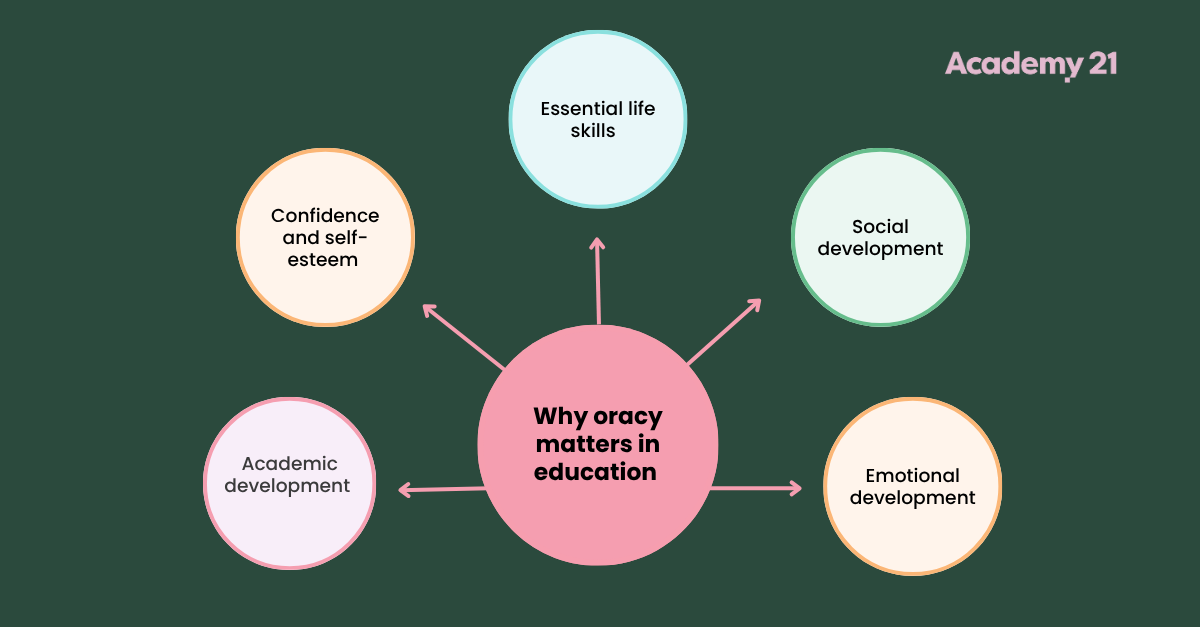
Practical examples of oracy integration include:
- Pupils take part in scaffolded debates on topics linked to the curriculum, practising structuring arguments and responding to differing viewpoints.
- Science lessons include opportunities for pupils to present experimental findings to small groups before sharing with the wider class.
- In maths, pupils explain their methods verbally to peers, justify solutions, or reason through problem-solving strategies aloud.
- Literacy activities encourage pupils to orally rehearse writing tasks, discuss story structure, and articulate interpretations of texts.
These activities not only enhance communication skills but also incrementally build confidence in a safe, supportive setting before pupils are expected to speak in larger secondary classrooms.
Confidence and self-efficacy: building resilience
Alongside oracy, confidence, and self-efficacy are crucial for a successful transition. Pupils who believe in their ability to face new challenges are more likely to take part in lessons, seek help, and embrace academic risks. Conversely, low confidence can result in hesitation, disengagement, and missed learning opportunities.
Structured oracy exercises, combined with guided reflection and constructive feedback, enable pupils to develop clear communication while simultaneously strengthening self-belief. By embedding these soft skills across the curriculum rather than teaching them in isolation, pupils gain transferable competencies they can apply in multiple contexts.
Transition also requires navigating new social environments. Pupils often move from familiar, small groups to larger, diverse cohorts, which can heighten anxiety around friendships, social acceptance, and fitting in. According to research, the emotional wellbeing of students during transition is closely linked to their long-term academic outcomes.
Evidence indicates that a strong sense of belonging correlates with higher engagement, motivation, and academic achievement, demonstrating that confidence and social skills are as important as academic preparation during the first weeks of secondary school.
Additionally, based on Ofsted findings, students in alternative provision are more likely to re-engage with learning when they feel recognised and valued. Schools that celebrate individual progress, not just academic attainment, see improved attendance and wellbeing.
Practical strategies for schools
To prepare pupils effectively, schools can implement evidence-based strategies before and during transition:
- Embed discussion across lessons: Offer frequent, structured opportunities for pupils to articulate thinking, respond to peers, and present ideas in small groups, gradually building to whole-class discussions.
- Cross-subject talk application: Scaffolded discussions in literacy link directly to written outcomes, while maths and STEM lessons encourage pupils to explain reasoning, justify solutions, and work collaboratively on problem-solving tasks.
- Invest in teacher development: Teachers benefit from professional learning on classroom talk, questioning strategies, and feedback techniques that deepen understanding and support confidence.
- Coordinate across phases: Collaboration between primary and secondary colleagues ensures continuity in vocabulary and communication expectations, reducing the likelihood of a confidence reset in Year 7.
- Develop social navigation skills: Encourage small-group collaboration, reflective goal-setting, and peer mentoring. Pairing Year 6 pupils with Year 7 “transition buddies” can enhance social confidence and practical orientation.
- Integrate wellbeing and PSHE: Structured check-ins and wellbeing sessions during early Year 7 allow pupils to reflect on learning processes, discuss challenges, and share experiences, reducing anxiety and fostering engagement.

How Academy21 supports pupils through transition
Even with robust in-school support, some pupils benefit from additional, flexible interventions, particularly in the months leading up to transition and during the early weeks of Year 7.
Academy21 is a DfE-accredited online alternative provision that supports pupils across Key Stages 2 to 5. Enrolments can be arranged within 48 hours, with no long-term contracts, and placements can last as short as one week. Short, intensive interventions focus on confidence-building, structured communication, and reintegration into school routines exactly when pupils need it most.
Our Key Stage 2 curriculum combines core subjects with embedded oracy, PSHE, and wellbeing. All lessons are live, interactive, and delivered by fully qualified teachers trained in relational practices, ensuring pupils with a wide range of needs receive the guidance and encouragement they need.
Sometimes, all it takes is a well-timed, targeted intervention to help a young pupil find their voice, build confidence, and thrive in secondary school. If you would like to refer a student or learn more about our primary provision, please contact our friendly team.
Written by
Academy21
Posted on
24/03/2026
Updated on
24/03/2026


Topic
Student successPost type
Blog